Grey blending is often described as a colouring technique.
But in reality, it begins much earlier — with understanding how your hair is changing.
Before a result can feel seamless, refined, and natural, the foundation must first become clear. Not simply what grey hair looks like… but how it behaves, how it reflects light, and why traditional colouring can begin to feel different over time.
For a broader understanding of how this process evolves from consultation through to long-term maintenance, you can explore our complete guide to grey blending, where each stage of the journey is considered in greater depth.
At Salon Maggie G, every personalised grey blending transformation is guided by 40 years of experience — and that process always begins here.
Why Grey Hair Behaves Differently — and Why That Matters
Grey hair is not simply hair without colour.
It is hair that has changed in structure, texture, and behaviour.
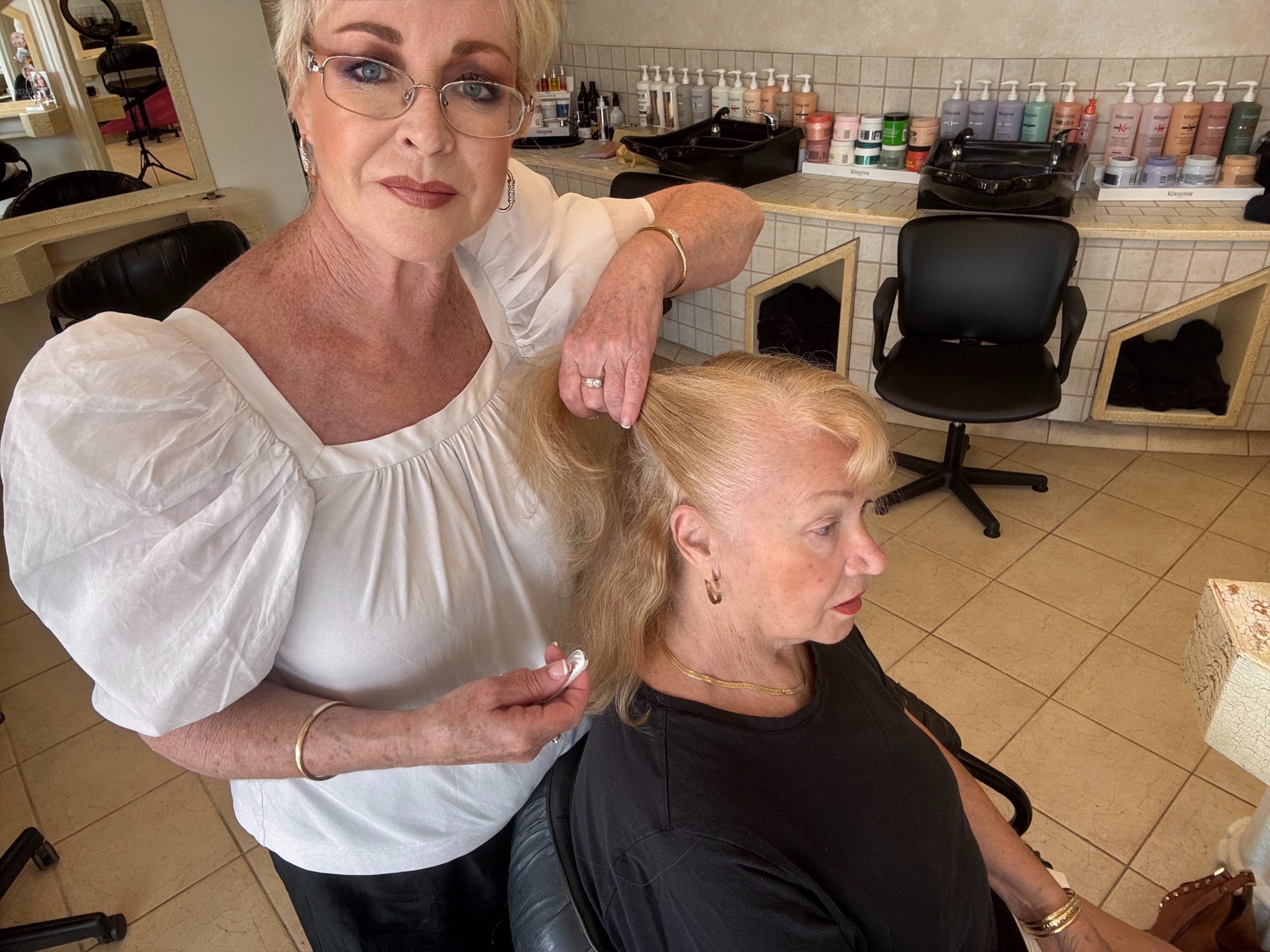
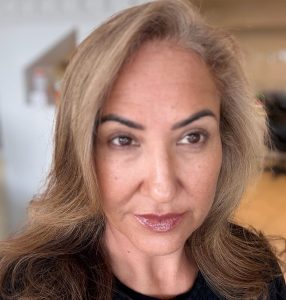
My client Angela visited me feeling concerned that her hair had become much coarser than usual and had also begun developing a slight curl. I explained that as grey hair gradually increases, the nature of the hair shaft often changes. Due to reduced melanin, lower natural oil production, and hormonal influences, hair can become drier, frizzier, and more resistant than before. To help restore softness and nourishment, I recommended the Kérastase Nutritive collection, including the 8-hour night serum to support the hair while sleeping.
As pigment declines, the hair fibre becomes more irregular.
It may feel drier, more resistant, or less predictable during colouring.
This is why grey hair often: – reflects light differently – absorbs colour unevenly – feels softer in some areas and coarser in others
These changes may appear subtle initially, however they influence every result that follows.
Understanding what causes grey hair is the beginning — because once the behaviour becomes clear, the entire colouring approach naturally becomes more refined.
Why Traditional Colouring Often Stops Feeling Right
There is often a moment many women quietly notice — when what once felt effortless begins to feel more structured.
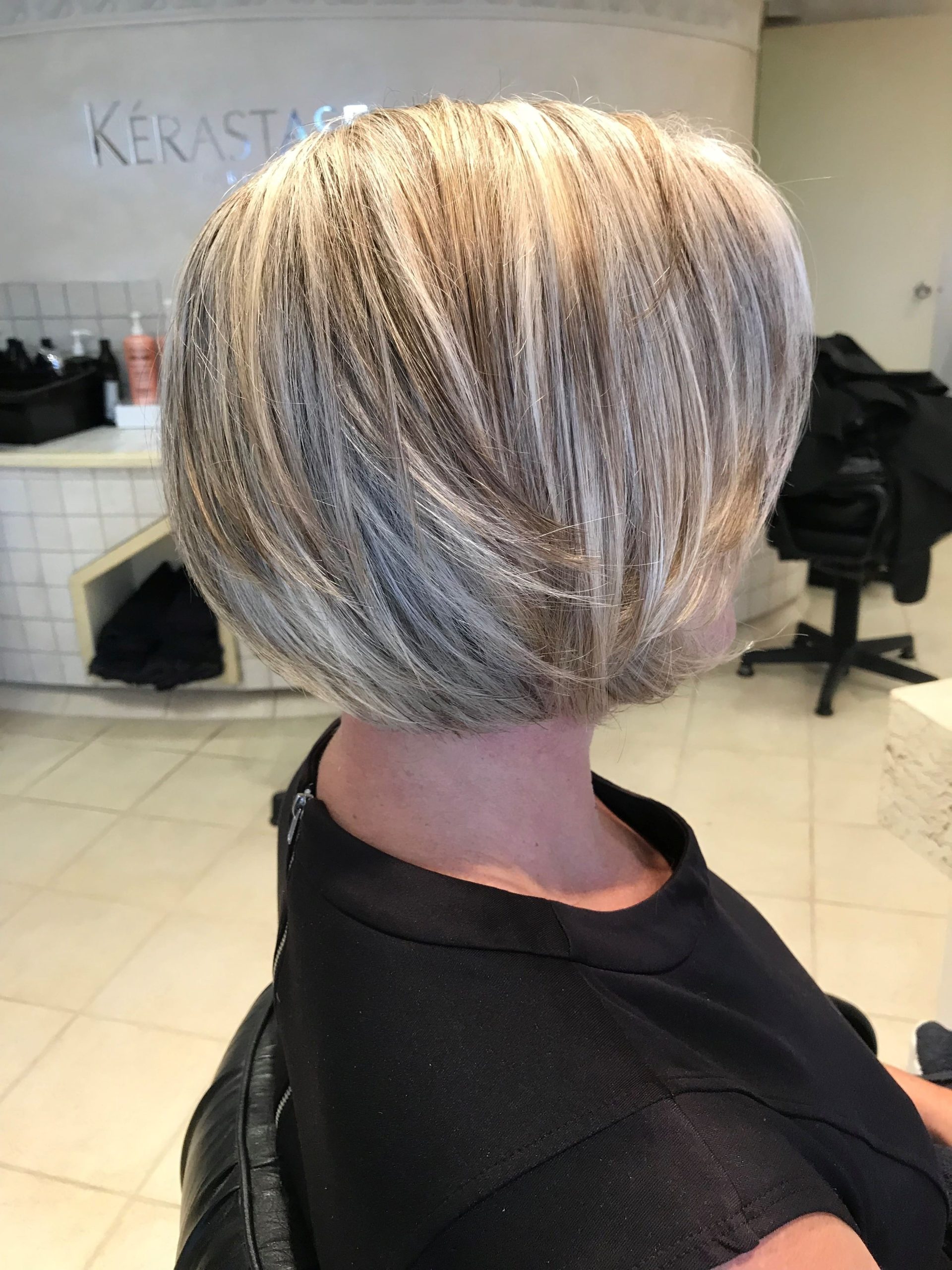
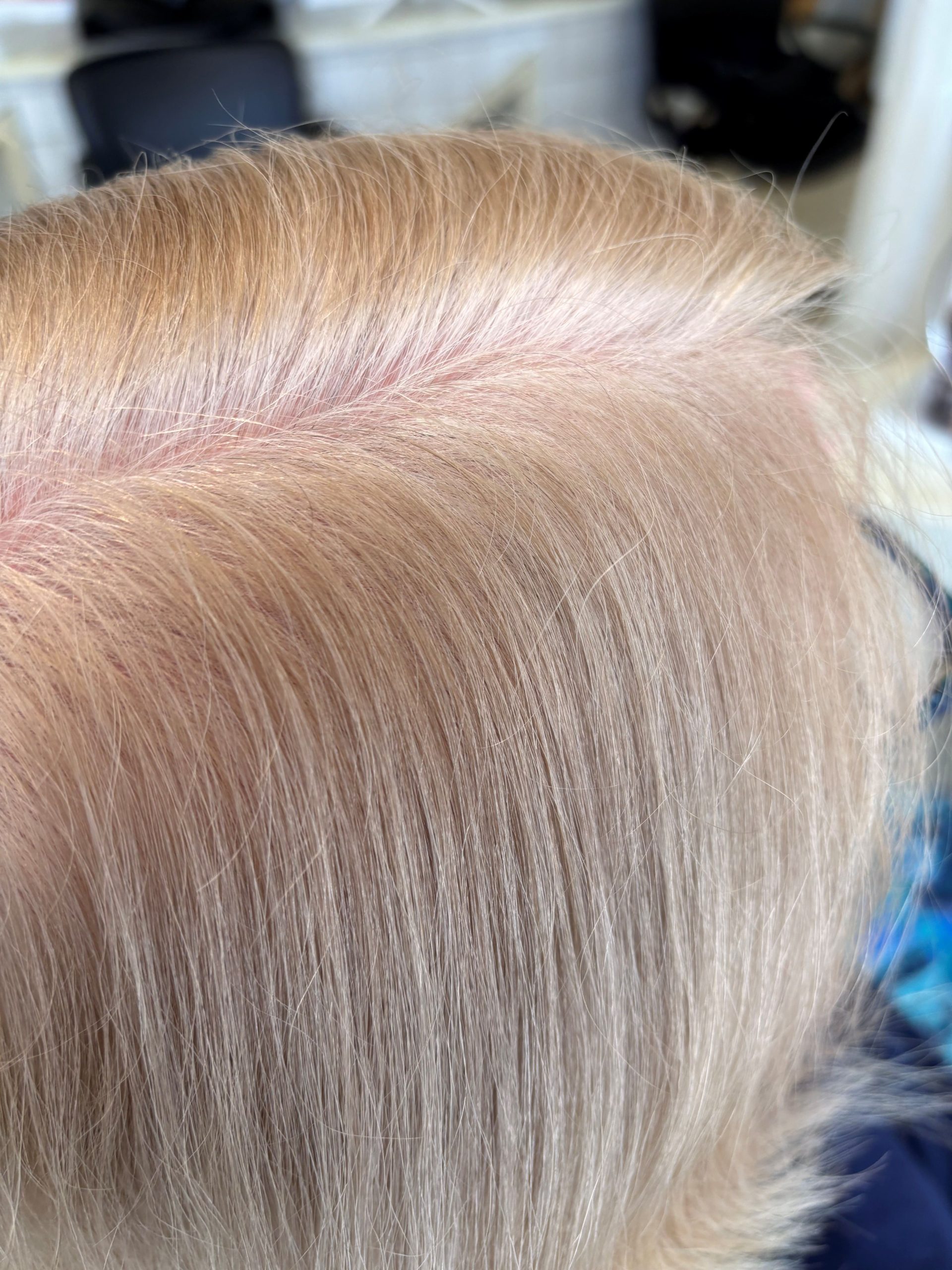
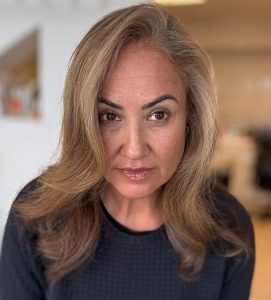
Janelle has naturally 100% white hair, and for many years I applied a permanent colour every five weeks while incorporating highlights to soften the regrowth line. Recently, we discussed several options moving forward, including transitioning from permanent colour to a softer semi-demi approach to create a less defined line of regrowth and a more seamless long-term result.
Traditional full colour relies heavily on consistency.
As grey hair increases, the contrast between regrowth and previously coloured hair becomes more noticeable, often requiring more frequent maintenance.
But the shift is not purely visual.
As the hair itself changes, traditional methods can begin to feel heavier, flatter, and less fluid over time.
This is where understanding how grey blending compares to full colour becomes important — not as a trend, but as a completely different direction.
Rather than resetting the hair to one uniform colour repeatedly, grey blending allows the result to evolve more softly and naturally alongside the changing hair.
Why Tone, Texture, and Clarity Become Everything
As grey hair develops, three elements begin shaping the overall result more than anything else: – tone – texture – clarity
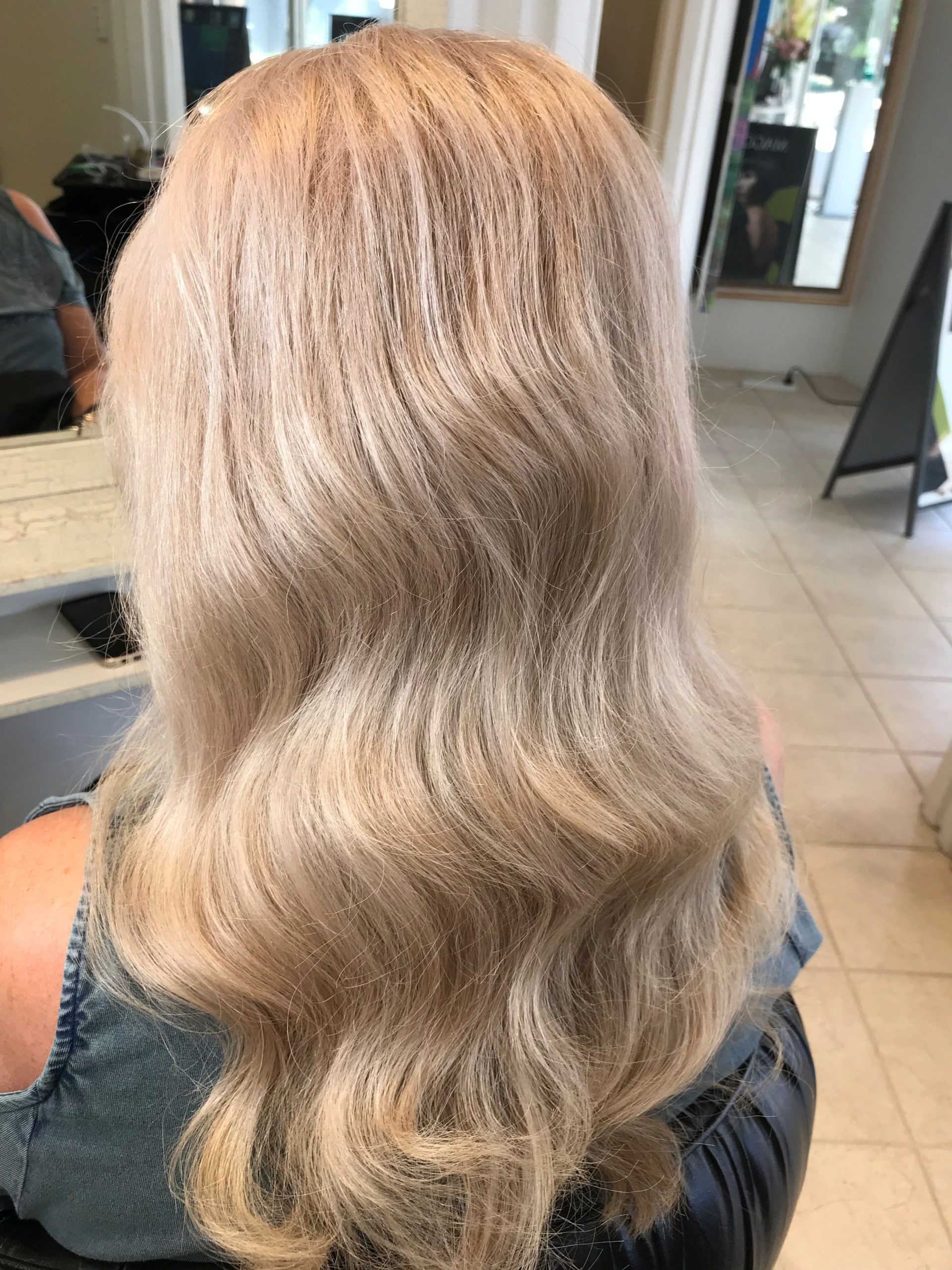
In Janelle’s case, her hair texture has remained beautifully shiny and healthy without significant structural change, making it easy to maintain. Her hair shaft remains fine, smooth, and even, which allows the overall clarity of the colour to stay bright and reflective. During her recent appointment, we again discussed grey blending and the different directions available to her — whether remaining with permanent colour or transitioning gradually into a softer semi-demi approach. Both options were tailored specifically to her hair and complexion.
Changes in texture influence how colour settles within the hair — something that becomes increasingly noticeable as grey develops over time.
This behaviour is explored further in how grey hair changes texture, where the internal structure of the hair begins influencing the final result more than many people realise.
Environmental exposure can also begin altering tone.
Over time, factors such as minerals, sun exposure, heat styling, and product buildup can subtly shift grey hair into warmer or yellow tones — something explored further in why grey hair turns yellow and often overlooked until the change becomes visible.
At the same time, tone selection itself becomes incredibly important.
When personalised correctly, it can soften features, balance the complexion, and create a more natural-looking result overall — as explored in grey blending skin tone, where colour placement and tone are designed around the individual rather than applied generically.
These elements do not work separately.
When tone, texture, and clarity are aligned together, the overall result begins to feel effortless.
The Difference a Refined Approach Makes
Grey blending is not about covering change.
It is about working with it.
During consultations at my salon, I often discuss the subject of grey hair and explain that grey blending is an available option. Many clients are surprised to learn that this approach even exists, as they have only ever known traditional colouring methods. Once I explain the process in a way that is personalised to their individual hair type, many begin feeling far more comfortable about starting the transition.
Rather than applying one uniform colour across the entire head, a more refined approach considers: – how the hair is evolving – how tone interacts with the complexion – how the result will grow over time.
This creates: – softer regrowth – more natural movement – a result that evolves rather than resets.
For a clearer understanding of how this translates into visible change, you can explore grey blending results what to expect, where the progression becomes easier to visualise over time.
To explore how personalised grey blending transformations are designed in practice, you can also view grey blending.
The Difference a Refined Approach Makes
The foundation of grey blending is not built in a single appointment.
It is built through understanding.
Once you begin recognising how your hair behaves — how it reflects light, how it responds to colour, and how it evolves over time — the entire direction begins to feel clearer.
What once felt like something to constantly manage begins to feel like something that can be refined.
If your hair is beginning to feel different… or you’re noticing changes that no longer respond the way they once did… you’re invited to reserve your personalised consultation at Salon Maggie G, where every transformation is thoughtfully designed to feel natural, seamless, and unmistakably your own.
BOOK NOW
Frequently Asked Questions
Why Does Grey Hair Behave Differently to Coloured Hair?
Because the internal structure changes as pigment declines, affecting texture, moisture levels, and colour response.
Why Can Traditional Colour Begin Feeling Heavier Over Time?
As grey increases, stronger regrowth contrast and repeated colour applications can make the overall result appear flatter or more solid.
Is Grey Blending Better Than Full Colour?
It depends entirely on the individual. Grey blending is designed for women seeking a softer, more dimensional, and lower-maintenance result.
Do I Need to Understand All of This Before Starting?
No. Your consultation is designed to guide you through the process and determine what direction feels most aligned with your hair and lifestyle.